


Failure to properly handle these calls jeopardizes not only customer and public safety, but also places our company at great risk. Attention to procedures and actively listening is essential.
Transferring Leak Calls
!Never second guess a customer’s concern. If they think the smell gas in or around the home, transfer to the Leak Line even if they are unsure of the smell. Better safe than sorry!
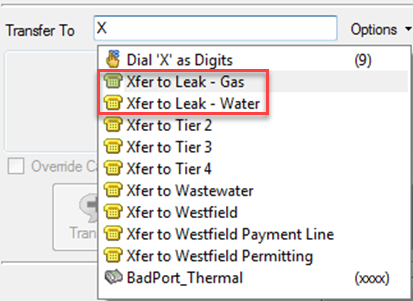
If you are NOT trained to take leak calls or place emergency orders, transfer IMMEDIATELY to the Leak Line!
- Both Residential and Commercial leaks will be transferred to the Leak Line
- Do not verify information or fill out the transfer box
- If the caller is uncertain whether they have an actual gas leak, the caller must still be properly handled by the Emergency Leak Line
- Do not cancel emergency leak orders once created
- Mishandling a leak call may result in a disciplinary cycle and/or termination
| Example of Transfer Options |
|---|
 |
Exposed Lines, Cut Lines, Hit Lines, or Explosion
*For any indication of EXPOSED LINES, CUT LINES, HIT LINES, or EXPLOSION, within or outside our service territory, ask caller for:
Name
Address
Contact Phone Number
Place consult call to Dispatch (6000)
How a Leak Call is Initiated
When calling 924-3311, the caller is immediately prompted to press 1 for a Gas Leak or 2 for a Water/Sewer/Storm Water Emergency. Upon pressing either option, the call will be transferred to the first available Q3 Associate.
For Gas Emergencies, a whisper tone will state “Gas Leak”.
When Do We Place a Gas Leak Order?
Listen to the language the customer uses. Customers may describe a gas leak without realizing a gas leak is present. If a customer describes seeing, hearing, smelling, and feeling anything like the lists below, a gas leak may be present and we should investigate.
| What Is the Customer Describing? | Still Not Sure? | |
|---|---|---|
See Gas |
|
 |
Hear Gas |
|
|
Smell Gas |
|
|
Feel Gas |
|
|
Gas Smells in Drain or in Water
!We treat gas/sewage smells in drains as a Gas Emergency. If the caller says a gas/sewage smell is in the actual water, this should be treated as a Water Quality concern.
Transfer the call to the Leak Line to help the customer determine where the smell is coming from and decide on the next action.
| Smell in Drain | What To Do |
|---|---|
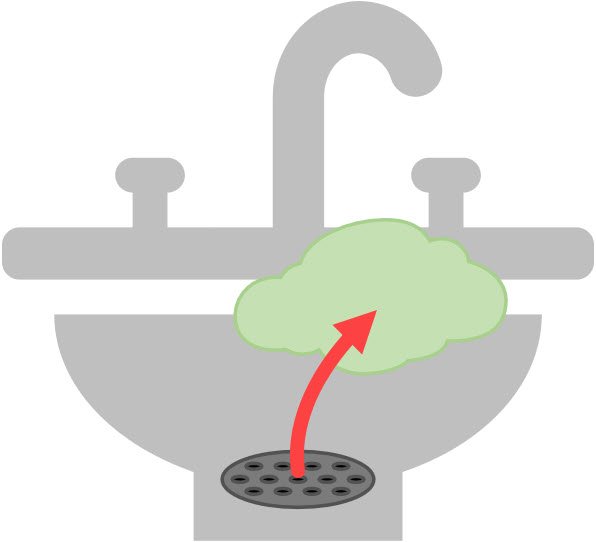 |
Transfer to Leak Line to create Gas Leak Order |
| Smell in Water | What To Do |
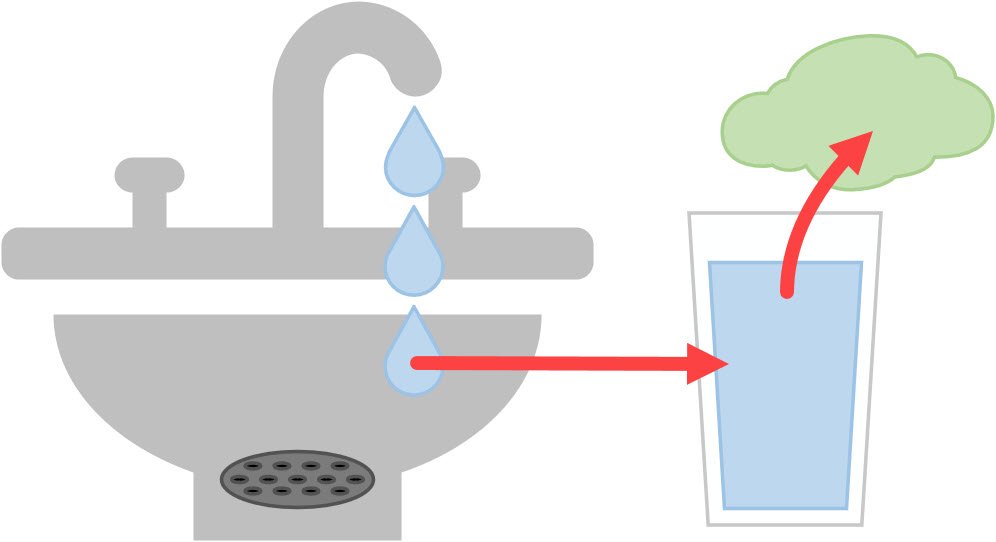 |
Transfer to Leak Line to investigate as Water Quality Concern |